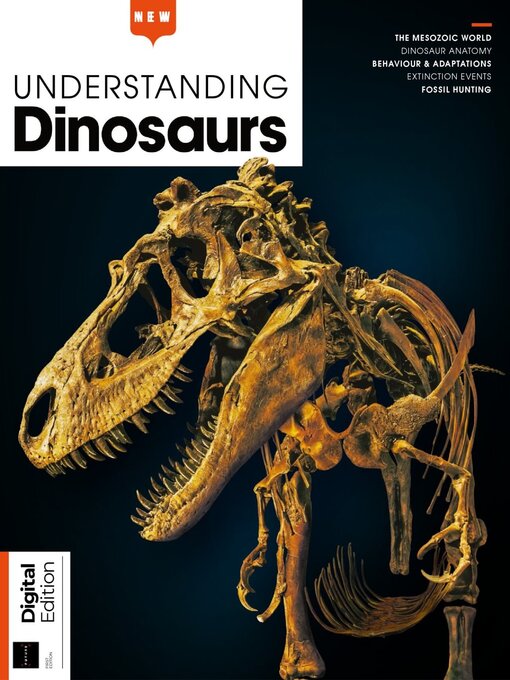
New from the makers of How It Works magazine, discover how dinosaurs dominated the planet for millions of years. From terrifying predators like Tyrannosaurus rex and Spinosaurus, to towering titans like Apatosaurus, discover how these incredible creatures evolved and survived in the Mesozoic era, before a fateful extinction event brought their reign to an end.
Welcome
Life in the Mesozoic
What were dinosaurs? • Dinosaurs were a group of reptiles that first evolved over 230 million years ago, and went on to dominate Earth
The Mesozoic world • Dinosaurs roamed Earth between 230 and 65 million years ago, when our planet was very different to today
Dinosaur habitats • Dinosaurs lived all over the world, from dry, dusty deserts to wet, sweaty swamps. Explore four different habitats that dinosaurs called home…
Triassic desert 250 to 200 million years ago • Dinosaurs first appeared during the Triassic period. Earth was hot, dry and covered in deserts
Triassic forest 250 to 200 million years ago • The weather was milder at the north and south poles. It was drier, so large forests grew
Jurassic swamp 200 to 145 million years ago • Sea levels were higher during the Jurassic period. Some land got flooded, which created muddy swamps
Cretaceous plains 145 to 66 million years ago • Life was not easy on the Cretaceous plains. Dinosaurs faced many changes to their habitat
Polar dinosaurs • Evidence shows that some dinos survived cold, dark winters
The Jurassic food chain • An example of predator-prey dynamics in the age of the dinosaurs
What was inside a dinosaur egg? • Just like modern–day baby chicks, dinosaurs grew and hatched from eggs to roam the planet a very long time ago
Which was the cleverest dinosaur? • The Stenonychosaurus was only about the same size as a human, but what it lacked in brawn it made up for in brains
Dinosaur defences • Dinosaurs evolved spikes, horns and even thick armoured skin to protect themselves. They needed to be able to fight off predators or risk getting eaten
Armour plating • The Scolosaurus had a body built for defence - from a bony club at the end of its tail to thick scales covering its body
How do we know dinosaurs had feathers? • It turns out that fossils have preserved much more than just bone structure
What did dinosaurs sound like? • Despite what you see on TV and in the movies, dinosaur calls may have been more about hissing and hooting than roaring and screaming
Five dinosaurs most likely to vocalise • The hadrosaurids had all the right genetic tools to make a racket
Q&A Dr Thomas Williamson • Curator of Palaeontology at the New Mexico Museum Of Natural History And Science
Were dinosaurs warm-blooded? • We tend to think of them as cold-blooded and sluggish, but mounting evidence suggests dinosaurs had an edge over their reptile cousins
Five arguments for dinosaurs being cold blooded • The case for the traditional, ectothermic view of dinosaurs considered
Q&A Professor Roger Seymour • Why the evidence for warm-blooded dinosaurs has this evolutionary biologist convinced
Did dinosaurs migrate? • The search for food may have led huge dinosaurs to travel huge distances in order to sate their appetites
Five facts about the Camarasaurus • What you need to know about this common North American sauropod
Q&A Professor Henry Fricke • How a professor of geology came to be researching dinosaur migration
Dinosaurs in Focus
Tyrannosaurus rex • Learn about the lizard king’s physiology and how it presided over the prehistoric jungle
Diplodocus • We find out how this mighty dinosaur once lived
Parasaurolophus •...